
Mea Culpa...

Mea Culpa…
I have to mostly skip this week. I have two articles due on the 20th anniversary of the 2005 NYC transit strike (December 20) and I’m trying to put together something for the Mamdani folks based on the “collaborative bargaining” piece I posted last week.
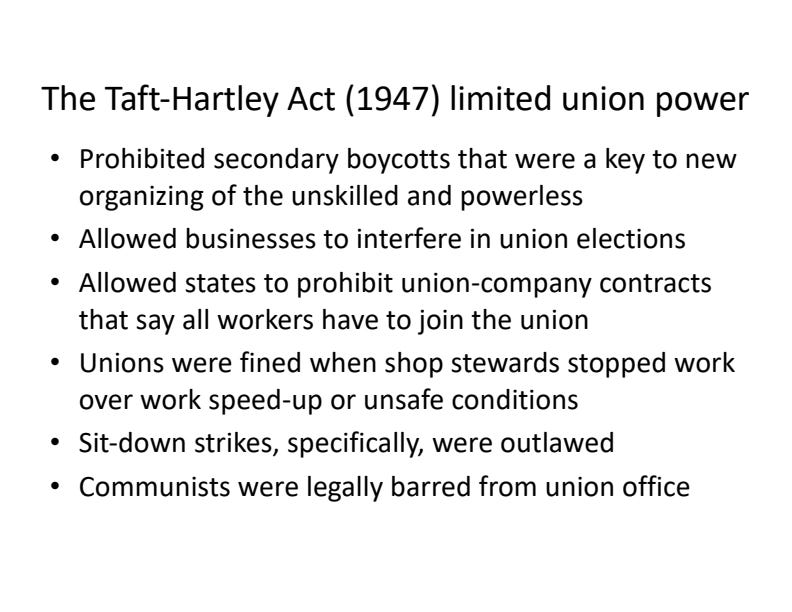
But I wanted to point you to this very good Guardian article, ‘A very hostile climate for workers’: US labor movement struggles under Trump.” I write a lot about self-inflicted wounds because, well, they are avoidable, but obviously attacks by the government extending all the way back to 1948’s Taft-Hartley Act (and rulings from the Supreme Court starting in the same era) have made all union work so much harder and made unforced errors even more costly.
While the article mostly concerns the costs of not having a quorum of the National Labor Relations Board and the cutback on staff that process most unfair practice complaints, two points perhaps could have been made more clearly.
The article mentions a challenge to the NLRB in the notoriously reactionary Fifth Circuit Court of Appeals. If that ruling is upheld by the Supreme Court, however, what is likely to emerge is not the sweeping away of the NLRAct in its entirety, but a decision that basically eliminates union challenges to various unfair labor practices on elections and bargaining, but leaves all the restrictions on union practices of Taft-Hartley (which amended the provisions of the NLRA) in place.
Waiting in the wings if the NLRB achieves a quorum are a host of bad rulings from the Board that will invalidate key rights of unions. For example, since the Board recognized Graduate Student-Workers as workers, unionization there has boomed. Fifty percent of all GS-Ws are now unionized and big improvements have been won at many institutions. It is widely expected that a Trump NLRB will reverse that recognition. Many of these GS-W unions will hang on, but what loss of recognition means is that they will have no legal recourse when university administrations openly and flagrantly commit what would otherwise be unfair labor practices. Those practices – such as Columbia’s refusal to negotiate with the bargaining committee the workers there chose to represent them – will no longer be considered illegal.