
Advising the Mamdani Administration – Part 1.5

Last week, I wrote about what we might expect from the Mamdani administration for New York’s private sector labor force. Before I turn to public sector labor policy, I want to solicit your advice and ideas.
As some of you know I was named to the Mamdani Transition Subcommittee on Transportation, Climate, and Infrastructure. That’s one of seventeen different subcommittees:
Housing
Youth & Education
Transportation, Climate & Infrastructure
Arts & Culture
Community Organizing
Community Safety
Economic Development & Workforce Development
Emergency Response
Government Operations
Health
Immigrant Justice
Criminal Legal System
Legal Affairs
Small Businesses & MWBEs
Social Services
Technology
Worker Justice
You can click on each to see the members of each subcommittee.
What is the purpose of these committees? Two functions were mentioned at the kickoff meeting:
1. To help with job appointments
2. To recommend and help prioritize policies
I’m a mass transit guy, and obviously a big priority of the Mamdani administration is fast and free buses. But “transportation,” broadly, is a whole lot more than buses and subways and commuter rail: bikes and bike lanes, ferries, Access-A-Ride, private cars (including parking, parking enforcement, and curb management), trucks, taxis and car services of all kinds, pedestrian traffic, potential light rail in Brooklyn and Queens.
Meanwhile the Department of Transportation is also responsible for traffic lights and streetlights, repaving, road and bridge maintenance, traffic studies, intersection redesign, and parking meters, among other things. It issues the NYC Streets Plan, whose policy recommendations the Adams administration has done a good job of ignoring.
In short, a lot of stuff about which I know little to nothing – although much of this work does neatly intersect with my complaints from last week about the privatization and supervision of city infrastructure work. (Here’s a picture of the work (not) being done at Manhattan’s Grand Army Plaza, at 59th and Fifth Ave. at 2:30PM last Tuesday. The project was scheduled to be complete this fall.)
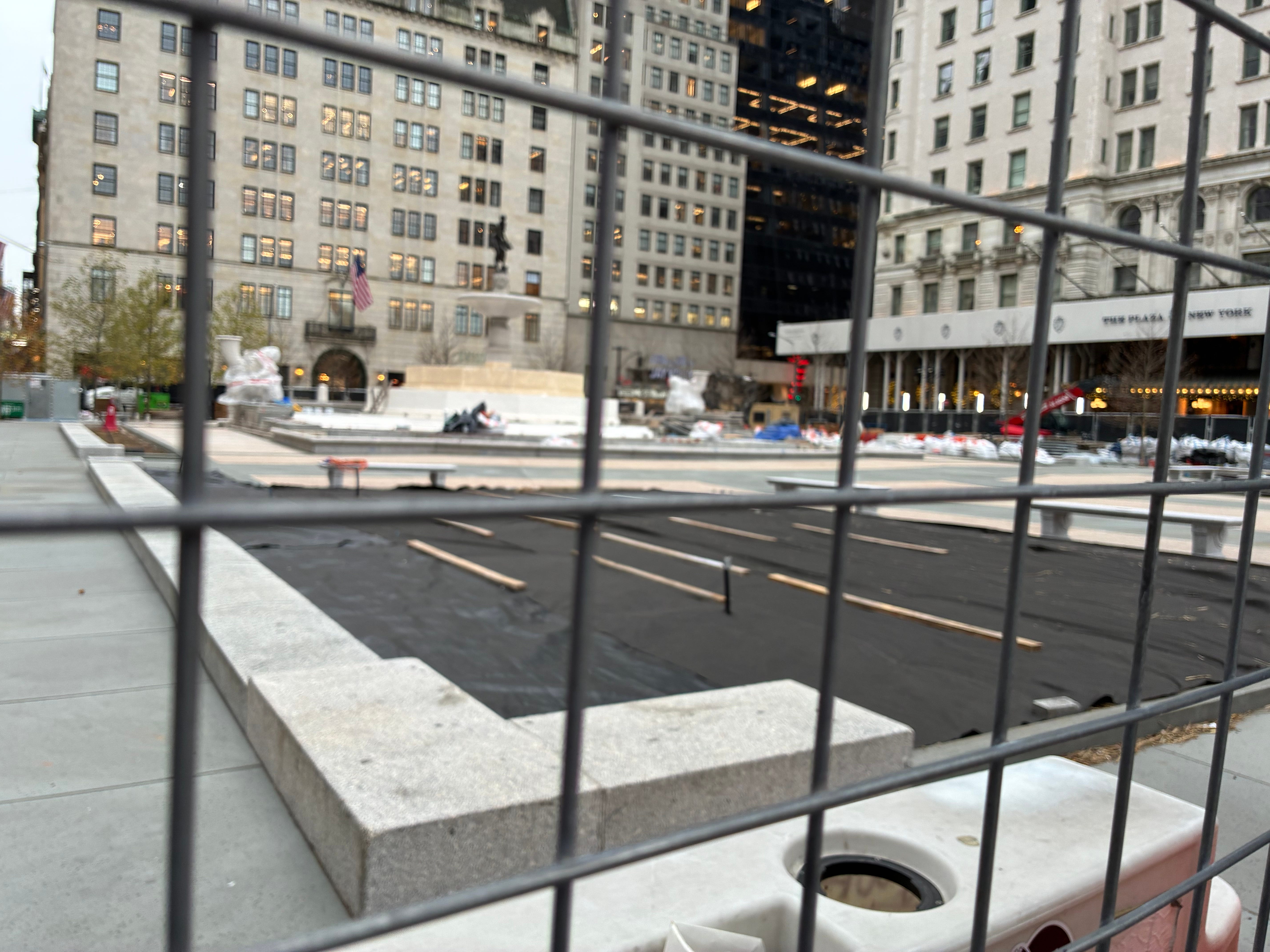
That the City can’t even ensure that work is done expeditiously in midtown in a prime tourist area is telling!
So here is my charge to you: send me ONE (!) recommendation – highly technical or utopian or somewhere in between – pertaining to the committee on which I sit at marckagan@aol.com. I don’t know yet how the committee is going to work, or how much our individual or collective voices will matter, but I’d like to be ready with ideas that go beyond my own knowledge base.
In Other News:
My book is going to published later this month. Here’s the promotional flyer for it. (For those of you who are former transit workers, that’s JP Patafio on the cover leading a feeder march from Quill Depot through Times Square on the way to join a massive contract rally in 2002.) Note that the hardcover price is exorbitant. (The modestly-priced paperback will not be out until deep into 2026.) But the good news is that the book will be Open Access – free to download. I hope that you will do so, and recommend it to others. I’ll provide the link in a few weeks.
2005 Transit Strike commemoration. CUNY’s School of Labor and Urban Studies is holding a “Reflection” on the 20th anniversary of the transit strike on December 9. For reasons I still don’t really understand, I was not invited to join the panel, although I am THE academic expert on the strike. Nonetheless, I encourage you to attend either in person or virtually and try to participate, although it seems that all questions will be pre-screened. You can read the chapter of my book on the strike here. (I’ll be writing shorter versions of this for Jacobin later this month and the New L:abor Forum in the spring.)
Unless breaking news interferes, I’ll return next week with my “utopian” ideas about how Mamdani might pioneer a new type of labor policy toward the city’s municipal workers, one which could improve the quality of city services while create more participatory democracy in both workplaces and unions.
I'm wondering if there will be a link to the meeting since I won't be able to get to the GC on time.
You know that I like the suite of recommendations that Sam Schwartz (former Transportation Commissioner, and then "Gridlock Sam") made in Sunday's NY Daily News. But just one?
Bridges are expensive. But pedestrian and bicycle bridges are much more affordable than vehicular and transit bridges. They send a message about the City looking forward, and serving walkers and cyclists. They are useful. They promote growth. They help commutes. They are good for recreation. I wanted to highlight current and future waterfront access. Build pedestrian/bicycle bridges (he said across the East River. I am picking different ones than Schwartz picked) - but it is the concept that I want to highlight.
1. Randalls Island links: South Bronx - Randalls Island and Astoria - Randalls Island (equity, recreation, replaces a difficult link on the Queens side)
2. Greenpoint Landing - Gotham Point (across Newtown Creek)
3. Roosevelt Island: either LIC to Roosevelt Island and Roosevelt Island to Midtown East OR
3. Roosevelt Island: Astoria to Roosevelt Island and Roosevelt Island to Yorkville
4. Red Hook to Governors Island
I'm not sure how to bring Staten Island into the mix - but there should be a way. Parallel to the Verazzano-Narrows? Bay Ridge to Stapleton or the North Shore? (or maybe the Staten Island Gondola)
I love that these are visible and useful, cost less than other capital projects, and help transform NYC's walkability into the future. I like to think of NYC as a walking city first, then mass transit, then bicycle, then car... and I would rank projects in that order.